Life Course History: Interview with Chad Abresch
Originally published by the Life Course Research Network (LCRN) on July 1, 2011
Note from the Author
In 2011, our Life Course Research Network conducted a series of interviews with national and international experts working to translate a life course approach into practice. Guided by PI Neal Halfon and conducted by researchers Michael Lu, Shirley Russ and Kandyce Larson, these interviews provide a “historic snapshot’ of our understanding at that time. They are not a comprehensive record of activity in the field but reflect the perspectives of a core group of MCH leaders. They prompt reflection on how far we have come and how much we have yet to do. Copies of these transcripts have been deposited at the Georgetown Center for the History of Maternal and Child Health. Interviewees include David Barker, Chris Forrest, Bernard Guyer, Cheri Pies, Chad Abresch, and Tina Cheng.
Explore the Life Course History Series
Interview
Published July 1, 2011
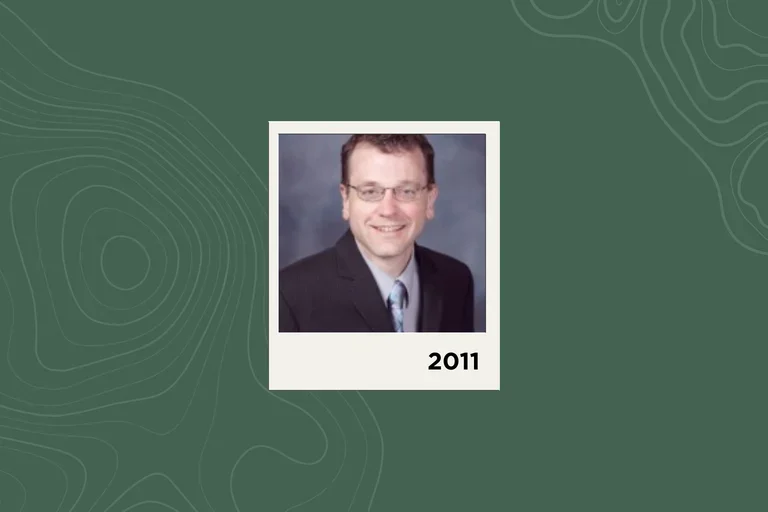
Chad J. Abresch, MEd is the Interim Executive Director for CityMatCH, an urban maternal and child health organization based at the University of Nebraska Medical Center. After completing his Master of Education, Mr. Abresch worked for the Wellness Councils of America as Senior Staff Writer where he authored a wide variety of corporate health promotion literature and assisted organizations in planning and implementing employee wellness programs. Following this, Mr. Abresch worked for the Gallup Organization, a national leader in research and corporate consulting. In his current position at CityMatCH, Mr. Abresch works to advance the organization’s mission to improve the health and well-being of urban women, children, and families. In addition to his health focus, Mr. Abresch also has a wealth of experience in non-profit mission and management beginning with his graduate thesis and including the start-up of a state-wide (NE) 501(c)3.
This interview – which was conducted by Michael Lu, MD, MPH, Associate Professor of Obstetrics & Gynecology and Public Health at UCLA – is the sixth in a series of interviews with national and international experts in life course health development. The series is produced by the Maternal and Child Health Life Course Research Network (MCH LCRN), which is managed by the UCLA Center for Healthier Children, Families and Communities, and made possible by funding from the federal Maternal and Child Health Bureau (MCHB, grant #UA6MC19803).
ML: How did you first become involved with research that contributes to our understanding of how health develops across the life course?
CA: I had heard a couple of presentations from folks you might have heard of, such as Michael Lu! Your talk made clear that life course concepts form the basis and are the broad foundational concepts for much of what we do in maternal and child health. Here at CityMatCH, we took that to heart. In 2008, we decided to dedicate our entire conference to life course. It was at that conference that you and Neal Halfon spoke, and a game was adapted from Cheri Pies.
ML: What, in your view, have been the biggest achievements in life course research to date?
CA: As you know, a lot of the research we currently have is more conceptual and theory framing. It does a good job of drawing people in and giving them a lens to what people do in MCH and public health. What we need at this point is a growing body of U.S. research that demonstrates “trajectory bending.” An example – teen pregnancy prevention – this may not be as early in the life span as one might want, but it gives us an enormous opportunity to change trajectories. We’re looking at outcomes that are only 12-24 months down the road, but we know intuitively that if we intervene in this area, we’re actually making changes across the life course, even across generations.
ML: I agree. One of the biggest knowledge gaps is “trajectory bending.” Are there any other knowledge gaps in this research that you deem to be top priorities?
CA: In general, the more that we can think about taking the long-term view and developing research around that area, the better we will be, even when the FOA calls for an evidence-based intervention that has only been demonstrated effective in the short term.
ML: What are the barriers to closing those knowledge gaps?
CA: I think that the economic and political environment we’re in is a barrier. We have a substantial deficit, and there is an increasing sense of national concern over the matter. The climate in Washington is going to outweigh a lot of the good arguments we have made for public health research and practice. This mentality results in a lack of patience to invest in something beneficial 20-30 years down the line. Most funding opportunities are going to be based on short-term impact and immediate return on investment; if the impact isn’t measurable in 15-24 months, then it’s less likely to receive funding.
ML: What role do you think this network can play in overcoming those political and economic barriers and closing the knowledge gaps related to trajectory bending?
CA: We can understand where there is momentum and capitalize on it together. For example, there is increasing movement around voluntary accreditation for health departments. As you know, several components must precede accreditation, such as community health assessments and health department strategic planning. So what are the opportunities for us to ensure that the life course perspective plays an instrumental part in these efforts? Is there an opportunity to encourage health departments to “think life course” as they work through strategic planning and accreditation? At CityMatCH, we’re finding the answer to be yes in more and more local health departments.
ML: Initially, we thought people would be interested in mechanism research, but we’re finding that a large majority of our members are the people who are actually working in the field (Title V agencies and MCH programs). It’s broadening our vision of what our research network can do. Given that, what would be a dream project for you and CityMatCH?
CA: As in previous responses, I’m most interested and passionate about working to alter intergenerational trajectories. For example, I think we have a real opportunity to make a difference with today’s fatherless youth and thereby radically reshape male involvement for the next generation. We have whole communities that are trapped in cycles of widespread fatherlessness, and for the most part, we approach that problem by trying to help dad - removing his barriers in the hopes that he will then return, invest, and be involved in the children’s lives. But we attend to the youth only when they begin to show signs of trouble. Is this the best use of limited resources, and does it reflect life course thinking? What kind of difference could we make in one generation if we were to develop evidence-based prevention programs that prop up the trajectories of fatherless youth instead? We would be aiming to prevent fatherlessness in the next generation, rather than hoping to treat the problems that arise one-by-one in this generation. Could we put these youth on a life course that leads to parental involvement and breaks the multigenerational pattern? I think so.
ML: We want to engineer collaborative innovation and help MCHB with life course research. You and CityMatCH know a lot about collaborative learning. Can you help provide some guidance for us on the design of this network to maximize collaborative learning? You have done many learning collaboratives, and some are more successful than others. What about some of those learning networks made them so effective and successful?
CA: One of the main hallmarks is that they have shared leadership. Obviously you have to start with a plan, great communication, and great administration, so people can understand the basic intent and process. But it’s just as important that the individuals in the collaborative have ownership. They may not have their own projects, but they all have responsibilities. That way, it goes beyond a series of meetings, and becomes a growing opportunity.
ML: How can we best design the network so that it’s most useful for both junior and senior researchers?
CA: I have been keeping up with the other key informant interviews in the series, and I like Cheri Pies’ idea of mentoring. I also like the related concept of pairing researchers in a peer coaching network. If we set it up in a peer coaching style, you may have more interest because you wouldn’t need to identify two cohorts – senior and junior. And then, from the outset, it’s not that you have the mentor and mentee – it’s that you both have a valuable perspective to provide and share with and assist one another.
ML: What can this network do to help CityMatCH and you?
CA: CityMatCH considers itself a translational organization, and we want to make sure we’re transformative. We see our role as working closely with these researchers to understand the theory and translate it at the community level and engage whole communities towards action. It’s our hope to be able to be a part of that, and rub shoulders with the research that is going on.
ML: This question keeps me awake at night. We’re not sure that if we build it, they will actually come. For the practice community, there is a buzz about joining and participating in this LCRN, but how do we sustain that interest over time, especially with the emphasis on research? How do we continue to engage the active participation of people in the community or policy world, so that we would have a genuine life course research network?
CA: Two things come to mind. Admittedly, the first one seems counterintuitive in the information technology age we live in, but I think there’s an importance to a face-to-face meeting. Oftentimes, our schedules are too crazy, but when we meet face-to-face, we’re able to shut everything else off and move forward in our agenda together. That opportunity often does not exist in other modalities.
You also bring up an interesting piece about sustainability. I think this goes back to my previous comment about shared leadership. If you develop an opportunity for shared leadership – really encouraging the perspective of people in the network and discovering what needs to get done collectively – then you’ll see leaders emerge and the work will sustain itself.
ML: You may have already addressed this one: life course health development is an interesting theory, but how does it address practice?
CA: Here again, I would go back to the need to take the long view. I was talking to a fellow MCHer recently about this concept and they illustrated how “short-term focused” we are in this country by asking me if I knew the average timespan for a strategic plan of a Japanese corporation. Fifty years.
ML: Wow, and this is for corporations? They’re not looking for short-term investment as a primary driver for priority, are they?
CA: I would presume they have shorter term operating plans, but the longer strategic plan stretches beyond even their own tenures. In the U.S., we’re not good at investing in tomorrow because we have trouble seeing past today.
ML: What do you think would enable us to turn theory into practice?
CA: It’s about researchers partnering with practice networks. It is about taking the research and establishing the research base. Folks in networks like CityMatCH bring communities together, and can work on getting these ideas to work on the ground.
ML: What do you believe are the highest research priorities?
CA: It sounds counterproductive for such long-term research goals, but the pragmatic side of me says that we need to establish evidence-based programs that can produce results in a short period of time, but also have the lasting results we truly seek. That is what’s being funded now and into the future.
ML: I’m not so sure those messages are counterproductive, but I think there are opportunities – for example, interconception care produces immediate return while addressing the longer gaps in that continuum of health services in women’s health across the life course. Do you have suggestions on topic areas for the 8-9 state of the science papers that the LCRN is trying to commission?
CA: A lot of the work we’re starting is based on the paper Milt Kotelchuck and Amy Fine wrote – a framework developed to help [MCHB] with strategic planning that uses the life course as its theory. I’m wondering if their work can be expanded or reworked for whole health departments.
ML: Anything else I forgot to ask that you think would be important to emphasize?
CA: I think those were a pretty comprehensive set of questions!
ML: I hope that this is just the start of ongoing conversations with you and CityMatCH, both about research and design.