Life Course History: Interview with Christopher Forrest
Originally published by the Life Course Research Network (LCRN) on April 1, 2011
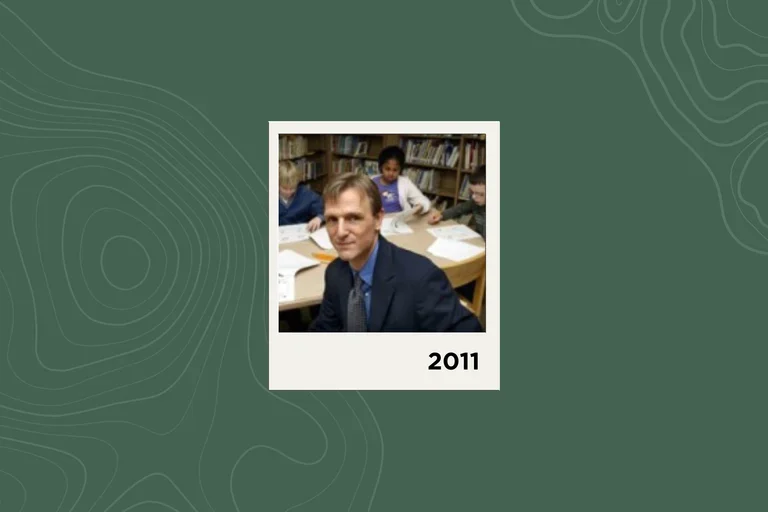
Note from the Author
In 2011, our Life Course Research Network conducted a series of interviews with national and international experts working to translate a life course approach into practice. Guided by PI Neal Halfon and conducted by researchers Michael Lu, Shirley Russ and Kandyce Larson, these interviews provide a “historic snapshot’ of our understanding at that time. They are not a comprehensive record of activity in the field but reflect the perspectives of a core group of MCH leaders. They prompt reflection on how far we have come and how much we have yet to do. Copies of these transcripts have been deposited at the Georgetown Center for the History of Maternal and Child Health. Interviewees include David Barker, Chris Forrest, Bernard Guyer, Cheri Pies, Chad Abresch, and Tina Cheng.
Explore the Life Course History Series
Learn more about Christopher Forrest
Interview
Published April 1, 2011
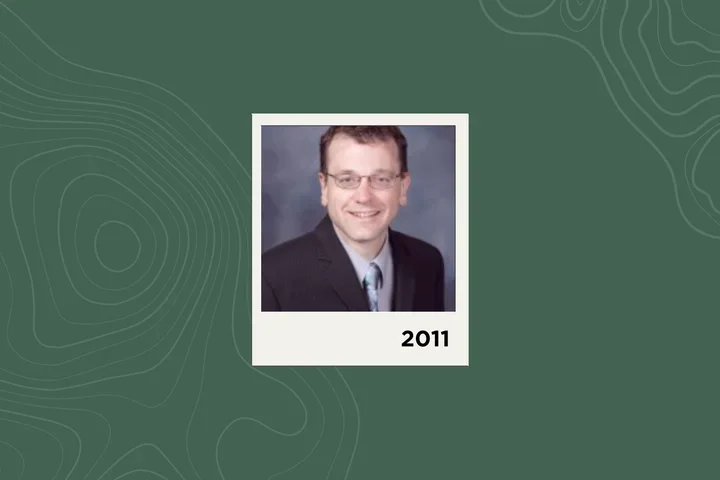
Christopher Forrest, MD, PhD is the Mary D. Ames Professor of Pediatrics at the Children’s Hospital of Philadelphia and University of Pennsylvania School of Medicine. He holds an adjunct appointment in the Department of Health Policy and Management at the Johns Hopkins Bloomberg School of Public Health. His academic focus is on the theory and measurement of health, pediatric population sciences, transforming children’s health, and informatics innovations in healthcare delivery. He has authored numerous scientific manuscripts and reviews, and his research is supported by a broad mix of funders, including the National Institutes of Health, the Centers for Disease Control and Prevention, the Agency for Healthcare Research and Quality, the California Healthcare Foundation, the Commonwealth Fund, and the Robert Wood Johnson Foundation. He leads several large, multi-institutional research efforts that include development and application of child-reported health and well-being outcome measures, child health services research, and using EHR data to transform care. Dr. Forrest and colleagues formed the Pediatric EHR Data Sharing Network (PEDSNet), which includes children’s hospitals and physician practices dedicated to leveraging their EHR data for research and practice improvement. Dr. Forrest received his BA and MD degrees at Boston University as part of a dual-degree program. He trained in pediatrics at CHOP, where he also served as Chief Resident, and completed a PhD in Health Services Research at Johns Hopkins School of Public Health.
This interview – which was conducted by Shirley Russ, MD, MPH, Health Sciences Professor of Pediatrics at the David Geffen School of Medicine at UCLA, and Attending Physician in the Department of Academic Primary Care Pediatrics at Cedars-Sinai Medical Center - is the fourth in a series of interviews with national and international experts in life course health development. The series is produced by the Maternal and Child Health Life Course Research Network (MCH LCRN), which is managed by the UCLA Center for Healthier Children, Families and Communities, and made possible by funding from the federal Maternal and Child Health Bureau (grant #UA6MC19803).
SR: Can you give me an idea of how you first became involved with research that contributes to our understanding of how health develops over the life course?
CF: I would say I got involved in this as a PhD student at Johns Hopkins School of Public Health.
SR: Who were you working with at the time?
CF: I had a whole community of mentors, many people. My thesis advisor was Barbara Starfield.
SR: What was your thesis on?
CF: My thesis was on primary care and the issues related to the effects of environment and genetics on children’s health. I went into this area because I saw primary care as one of the ways to address disparities in population health, and to deliver true healthbased interventions. Over the last 12 years, I have been developing measures that allow us to assess longitudinal changes in people’s health, and have been involved in a number of projects in that area.
SR: So would you say measures development is a big interest of yours?
CF: Well, it’s the means to an end. My big interest is in measures that support research on ways to promote lifetime health, and also theoretical models of health that stand in contrast to models of illness and disease. But I got involved in metrics and theory because I think they are a necessary precondition to any meaningful model of health.
SR: What do you think have been the biggest achievements of life course health development research?
CF: The studies that have emerged from the birth cohorts from the United Kingdom and New Zealand on statistical associations between fetal life and changes in infant life in relationship to adult outcomes.
SR: What is the biggest knowledge gap in life course health development research?
CF: We have almost no knowledge of how health changes over the life course, and so we have a very partitioned approach to assessing health and illness that reflects the artificial distinctions that we have created, say, between pediatrics and internal medicine. I think that we need to connect the dots, if you will. We need to fuse the fields of development and aging because it’s all one set of processes. We need to figure out how health that starts at the moment we are born changes over life and how it can be strengthened. I don’t think we are even ready for interventions because I think our understanding of this area is so limited.
One of the major limitations is that we are not talking about the same thing. You asked me what I think the most important findings are and they are all related to disease, and actually I think that the issue really becomes what do we mean by health, how do we measure it, and what are those assets that we acquire early in life and then mold and shape in adolescence and then draw from as adults, and how do they evolve? I think that is a big question. I believe if we understand health, we will be able to better address adaptation to and prevention of disease.
SR: What do you see as the barriers to closing the knowledge gaps?
CF: We have a disease-oriented funder of health research. I think that is the most important barrier. If we had an institute at the NIH that was fully devoted to understanding health development, then we would have seen much more research in this area. I have been very concerned throughout my career that the disease-specific approach is so dominant in health research, and that to really grab a person-focused agenda of health has been very challenging. Those of us that have been involved in this field have found ourselves entering it in various different ways, usually attaching health research to some disease-oriented project.
It wouldn’t necessarily require a reorganization of NIH. As NIH has identified crosscutting themes, it has formed offices - we have an office of rare diseases research, an office of behavioral sciences, etc. Maybe this is a case for an office because you can talk about cardiovascular health and you can talk about how health influences someone’s likelihood of clearing the HIV virus. There are these cross-cutting themes that might be served well by an NIH office, and we should be advocating for this.
SR: What role can the LCRN play in helping to overcome these barriers and close the knowledge gap? You just mentioned advocating for some type of reorganization at NIH or special office around health.
CF: The biggest need is to advance the measurement and the conceptualization of health so that we have a field that has a common lexicon. The second piece would be to conduct research using the common theory and measurement approach. The third piece would be education - continuing education for physicians and for doctorally-trained researchers. I think there should be an advocacy mission, a research mission, and an education mission [for the LCRN].
SR: What would be a dream project for you to work on through the LCRN?
CF: Neal and I are already working on a concept of a pediatric measurement network for the National Children’s Study, which is not the same thing [as the LCRN], but closely related. We are trying to secure resources to advance the assessment of health, as opposed to illness or disease, from birth to adulthood that is based on a common theoretical model and that has measures that are biological in nature as well as perhaps clinical observational and self-reported. Then we will be making some huge strides.
SR: Have you participated in any other research networks that you have found beneficial to your work that we can consider modeling the LCRN after?
CF: I have had a lot of experience working with networks, and I currently work in or run a couple. One advantage of attaching a network to a professional society - models here are the American Academy of Family Physicians National Research Network, and the Academy of Pediatrics research network called PROS – is that you are connected to an organization with a dissemination arm that assists with advocacy and education, as well as providing staff a home for professional development [A professional society] is a third party kind of mutual territory, so you don’t get involved in all of the academic my institution/your institution back and forth. I have also worked with a primary care network that was a freestanding non-profit organization, which ultimately went belly up because of the lack of a large organization to assist with the ups and downs of cash flow in research.
I am also very intrigued by a network-based collaboratory using the internet for scientific collaboration. I think a big challenge for a network like this is that the work flow for most researchers does not support active participation in a nonlinear social network of that type. But that direction of creating a center without walls where resources for the network are based at multiple institutions with distributed governance, and where everybody feels as though they have a role in the network (although some people have more of a role than others), and where there is shared responsibility – I really think that is the direction of the future. I don’t know of any health care networks that are like that. I know there are many of these networks, however, in the biological sciences and in astronomy. There are a number of books and articles written on this, and there is a group called Creative Commons that tries to develop ways of reducing barriers to the sharing of data and knowledge - they have done a lot of work on the IT issue. CERN in Europe is an example of a network of physicists that is very effective. The network of astronomers that have used the Hubbell telescope has also been very effective. The network of institutions that collaborated to sequence the human genome is another example. There is a book that speaks more to this topic called “Scientific Collaboration on the Internet” (Olson, 2008).
I chair the Executive Committee of the PROMIS network, which is funded through the NIH. It is an NIH science investigator network with a huge amount of funding - $70 million has been devoted so far - and we also have been successful at publishing and making strides in our work. That network has a governance structure and a partnership with NIH, and we are working on creating a sustainable entity that can survive beyond where we are. It’s not distributed – we have an executive committee and a steering committee and it has a conventional approach to governance.
Another network I think is of great interest is the HMO Research Network, and there is a sub-network there called the Cancer Research Network. That network is a collection of a group of model HMOs that all share data for the purpose of conducting a wide range of research projects. There is a governance structure there, but any participant can do a research project that is approved by the network’s Science Committee and Executive Committee. The advantage of participating, aside from the large numbers, is that they have created a virtual data warehouse model in which data from each of the HMOs are extracted from their local data sets, put into a standardized format, and then when a research project is conceived and then approved, the investigators write the SAS code and then the SAS code is sent to each of the local sites. So you are able to deal with a lot of data sharing issues. That is another model that I think has been very effective. We are trying to emulate that model with another network I direct, which is really in its formative stages, called PEDSNet - Pediatric EHR Data Sharing Network. It is a collection of 12-15 children’s hospitals that are sharing data in the same way that the HMO research network is operating.
Another possibility, particularly for a life course network, would be to start leveraging the Clinical and Translational Science Awards (CTSAs) around the country and develop a data warehouse, which many people talk about wanting to do. But maybe start with something very focused as a proof of principle. Can we collect existing data at CTSA sites for a birth-80 year old study where we are measuring the same thing on large numbers? I would be very interested in working on that. When I first started talking about the Pediatrics EHR Data Sharing Network, everyone said there were tons of barriers, but then AHRQ and the stimulus plan and CHIPRA issued all these grants, and the barriers seem to have gone away and everyone is talking about trying to develop distributed data networks. If we can get investigators energized, I think there is something to be accomplished, but whether it happens within the structure of the CTSA is certainly an open question.
SR: How can we best design the LCRN so that it is useful for both senior and junior researchers?
CF: It can be a network of educators or a network of scientists – if it is a network of scientists then it has to be about data. Creating a data resource that is available with very low barriers to usage would be the most important advance this network could achieve to pursue its goals and to make it useful to junior and senior researchers.
SR: What is something unique that the network could do to support you in your research endeavors? You have already mentioned developing some sort of data resource in providing a potential data set that could be analyzed.
CF: Stick with a focus on the data systems. I think if the network could be successful in advocating for an NIH office, that would be hugely beneficial as well because it would lead to good things. I would flip the question around more along the lines of, “How can I help the network? How can I help others?”
SR: You mentioned that you had a group of mentors. Are you interested in mentoring?
CF: Possibly. I think we are even talking about creating a virtual training program for outcomes and the relationship between outcomes and comparative effectiveness. So in that case, the virtual network might be of interest to the LCRN. The idea of the training program is that there is no institution that can pull all of the resources into one place that could effectively train someone in interdisciplinary research, so you have to find new ways of collaborating. I think we not only have to collaborate in research but also in education. There has been at least one example of a National Institute of Mental Health (NIMH) virtual fellowship, and I am interested in pursuing something along these lines. You could imagine something in a virtual training program about understanding and measuring interventions on health, with life course as one big piece of that and measurement the other. [The trainees] would have to know about genetics and social epidemiology and everything in between to be the kind of scientist needed for the future, and this network could help with that.
SR: We know how busy you are. What would make it easier for you to actively participate in the network over the next 3 years and beyond?
CF: Focused projects that are consistent with my interests.
SR: What should the network do to advance the methodology of life course health development research?
CF: I don’t think we have to do much to advance the statistical methods of longitudinal data analysis because I think that is happening well. Even in causal modeling, there have been many advances. I think the challenge lies in linking measures that assess the same health attribute across the life course so that you have a common metric you can monitor from birth to death – that is reasonably challenging. To give a concrete example: What does it mean to have a healthful immunological system, and what are the key components of that, how do you measure them, and how do they change over the life course? Finding a project that could show how health develops from birth to death and having a common metric for that health attribute would be a phenomenal advance. An example of this is the potential project I mentioned earlier – a pediatric measurement network, or “positive health.”
SR: One question commonly raised is, “Life course is an interesting theory, but what are the implications for practice based on what we know to date?” How would you respond to that?
CF: I would say that the work and writing we have done about life course is based on the need for a model of health. It is of interest from a theoretical perspective and also from a practical perspective because what we have is a system that is not focused on health, and as a result we are constantly focused on patching people up when they get disease. What we know is that there are these major connections between developmental stages, so it is not just that what happens in fetal life can predispose you to negative outcomes, but that it can also predispose you to positive outcomes. The practical implications are that we may develop a new science of health that allows us to create interventions early on to promote health that we know will have lifelong implications. Right now, it sounds good, but we don’t have a lexicon and we don’t have the measures and we don’t have the theory, so it’s not practical.
SR: What do you think would help enable translation of knowledge of life course into practice?
CF: Common measures understood by all to mean the same things: a common lexicon related to creating the typologies and the health theory.
SR: What do you believe are the highest priority topic areas that this network could focus on to advance the state of life course research for the maternal and child health field?
CF: A very focused project that extends our knowledge on how preconceptional health affects fetal and infant health.
SR: As part of this initiative, we are going to be commissioning 8 or 9 state-of-thescience papers, and we are trying to figure out how to break those down. We don’t necessarily want to do it by life stage or disease state. What do you suggest?
CF: Articulating the key dimensions of health that are important across the life course, and then identifying papers that relate to those dimensions. The problem you are going to have is that kind of framework might not lend itself to the kind of framework investigators have been using, so it might not be as clean as you would like. Organ system is one, a whole-person focus is another. I would probably take an organ-system approach. So for example, there is much known about bone health across the life course, so a paper that addresses fetal development all the way to osteoporosis. You could tick off each of the different organ systems. Even though it is not the most intellectually satisfying approach, I think it might be the best way to frame the papers so that they will be accessible to the people you want them to be accessible to.
SR: Is there anything else we haven’t talked about that you think is important for us to work on or consider?
CF: Stimulating a critical mass of people to come together around these ideas in some form of society. They say it takes 5000 members of a society to support a journal, but there are plenty of smaller societies that have journals. Is it time to start thinking of ways of bringing all of those people who think about life course issues together in a professional society, at an annual meeting, or through a journal, or is that too conventional and maybe the idea is social networking?