Life Course History: Interview with Bernard Guyer
Originally published by the Life Course Research Network (LCRN) on June 1, 2011
Note from the Author
In 2011, our Life Course Research Network conducted a series of interviews with national and international experts working to translate a life course approach into practice. Guided by PI Neal Halfon and conducted by researchers Michael Lu, Shirley Russ and Kandyce Larson, these interviews provide a “historic snapshot’ of our understanding at that time. They are not a comprehensive record of activity in the field but reflect the perspectives of a core group of MCH leaders. They prompt reflection on how far we have come and how much we have yet to do. Copies of these transcripts have been deposited at the Georgetown Center for the History of Maternal and Child Health. Interviewees include David Barker, Chris Forrest, Bernard Guyer, Cheri Pies, Chad Abresch, and Tina Cheng.
Explore the Life Course History Series
Learn more about Bernard Guyer
Interview
Published June 1, 2011
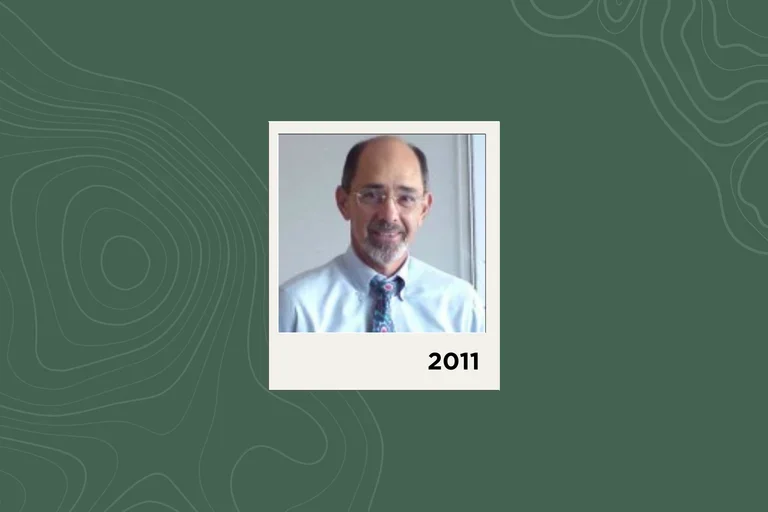
Bernard Guyer, MD, MPH is the Zanvyl Krieger Professor of Children’s Health Emeritus at the Johns Hopkins Bloomberg School of Public Health. A physician trained in both preventive medicine and pediatrics, Dr. Guyer served for seven years as director of the state MCH program in Massachusetts, and for five years as a CDC medical epidemiologist with national and international service. He has chaired or been a member of both state and national committees on childhood injury prevention, outreach for prenatal care, infant mortality, and Medicaid. Dr. Guyer and colleagues at both Harvard and Hopkins have further contributed to providing research that can be used to strengthen the way in which the MCH field addresses its most pressing problems across the lifespan.
This interview – which was conducted by Shirley Russ, MD, MPH, Health Sciences Professor of Pediatrics at the David Geffen School of Medicine at UCLA, and Attending Physician in the Department of Academic Primary Care Pediatrics at Cedars-Sinai Medical Center - is the fifth in a series of interviews with national and international experts in life course health development. The series is produced by the Maternal and Child Health Life Course Research Network (MCH LCRN), which is managed by the UCLA Center for Healthier Children, Families and Communities, and made possible by funding from the federal Maternal and Child Health Bureau (grant #UA6MC19803).
SR: How did you first become involved with research that contributes to our understanding of how health develops across the life course?
BG: I am a pediatrician by training, so I have been in the life course business for a while. I have worked in maternal and child health since the early 1980s, and even then we were looking at early antecedents of adult health. I worked on topics like injury prevention, infant mortality and children’s immunization. A long time ago, I was influenced by looking at multiple determinants of health, health disparities and social determinants. I spent a fair amount of time in the UK working with colleagues there. I became aware of the Barker work in the mid-to-late 1980s, and began incorporating that into my teaching of MCH. I went and visited Barker briefly at his school in London, and also Catherine Law, and I began working in areas like a life course approach to women’s health and the perinatal period. At some point, I became aware of Clyde Hertzman’s work. All of that influenced my own thinking and research.
Our generation has “rediscovered” life course research. When I looked at the work done by Harold Stewart and others interested in child nutrition and childhood infectious disease, I realized that a lot of these ideas have been rumbling around pediatrics and child health for a very long time. We should pat ourselves on the back for reviving it and trying to bring it into the current agenda, but the roots have been there for a very long time.
SR: As you know, I’m from the UK, and also find the history of life course research fascinating. Who else did you work with over there?
BG: Over the years, I have known and visited Nick Spence, who wrote about poverty and social determinants, at Coventry. I have had several opportunities to undertake visiting professorships. I spent the longest period at the National Perinatal Epidemiology Center when Diana Elbourne and other people were there. My wife is English so we’ve been going back to England for the past 45 years! Barry Pless was one of my teachers at the University of Rochester School of Medicine; he is now in Montreal and is also very connected with many of the English researchers.
SR: What, in your view, have been the biggest achievements in life course research to date?
BG: People initially disputed the Barker hypothesis, and then gradually, one after another, began coming around to it and “signing on” even when all the evidence might not have been there. When I met David Leon at the London School of Hygiene, he was trying to bring rigorous cardio-vascular epidemiological methods to the life course hypothesis? He began working on the Scandinavian longitudinal datasets and strengthened the relationship between birth weight and adult hypertension. Gradually, many of the skeptics began to accept the evidence for these long-term life course effects and early phenomena influencing adult chronic disease conditions. The publication of the book by Diana Kuh and Ben Shlomo (A Lifecourse Approach to Chronic Disease Epidemiology), added to the evidence.
I recently heard a radio interview with the journalist Annie Murphy Paul, who published a book about her pregnancy that draws on the life course approach. When the interviewer asked her what is the strongest piece of evidence about these early antecedent life course events, she had a weak answer. That is a problem for this field. I think the field needs some very clear examples of important life course relationships, backed by solid research data. The conceptual thinking is not enough.
SR: What do you see as the barriers to closing those research gaps?
BG: The longitudinal datasets aren’t there, and the datasets we have are not good enough. There is a worldwide search for longitudinal datasets that have enough measurement points and relevant variables. Scholars that are interested in these sorts of datasets from different perspectives are beginning to make connections. We have a group here at Johns Hopkins that is interested in the epidemiology of mental illness, and they have gone to the Danish datasets to look at the early precursors of mental health problems. I think there is a very strong body of research that links perinatal viral infections to the onset of schizophrenia, and other conditions. The Danish datasets are particularly strong. We haven’t been good at establishing those large longitudinal datasets here in the US. Launching a large study is difficult, in part, because the relevant variables today may not be relevant in 60 years when researchers want to analyze them. On the one hand, there is a need for longitudinal datasets, and on the other hand, there are a lot of difficulties in deciding what data should be collected and which variables need to be included. As we become more aware of multiple determinants of health, we realize we need to be looking at a wide range of social, environmental and biological markers.
SR: What role can the LCRN play in helping to overcome these barriers and close knowledge gaps in your area of research?
BG: I’ve gotten to the age when my role is to interest younger people in taking on bigger questions. What we ought to be doing is getting more graduate students and young scholars interested in incorporating difficult life course questions into their work. I don’t think we should lead them down a “primrose path” of starting longitudinal studies, however, because they may not be alive 60 years later to look at the data. We should get them to think about some intermediate variables that can be collected in the short term or medium term. What are the methods that can short-circuit the need for 60-year follow-ups? The point is to get students and young scholars interested, and make sure they’re beginning to incorporate innovative methods into their research plans.
To me, one of the important successes of life course research will come when our colleagues in the epidemiology and adult medicine departments begin to ask serious questions about the early life of the people they’re studying. The cardiovascular journals are full of work based on contemporary variables. Right now researchers are satisfied to look at life events that occurred 5 or 10 years before, say, a cardiovascular event. They consider that to be longitudinal research. In fact, they need to start looking at the preconceptional and prenatal lives of the mothers of their subjects. I think getting scholars to think about and to care about these very early factors will be a sign of success.
One specific challenge the LCRN can work on – and I’ve written about this in commentaries – is to begin studying the attributable risk of early antecedents. While there is considerable work showing that early antecedents make a difference as risk factors for disease, there has not been enough work on how much difference they make. I think that would be a contribution that would help the field. For example, the usual risk factors examined by cardiovascular epidemiologists may have reasonable relative risks but small attributable risks. On the whole, the well-known CV risk factors explain very little of total burden of disease. What would knowing more about early antecedents add to the attributable fraction? Life course researchers need to ask such questions.
SR: What would be a “dream project” for you to work on through the LCRN?
BG: I just retired! The research group that I’ve been working in has been focused on health in early life. I think that is a very elusive concept. What has been the evidence that early life health has long-term consequences? So far we’ve looked at the literature, and some of the younger people in that group have begun to analyze longitudinal datasets on health and early life. This is high priority work. What does it mean to be a healthy infant, and how would one define health in infancy? We know it’s about more than just the number of illnesses the infant contracts. What difference does it make? That’s where I would personally like to see research right now. If I were a now a 25-year old researcher, I would work on the fetus and the placenta. I think fetal physiology and social dynamics is tremendously important for future development, but we know very little about that.
SR: Have you participated in any other research networks that you found beneficial to you in your work, and that we should consider modeling the LCRN after?
BG: There are people who have participated in the MacArthur networks, and I think those are people worth talking to. The social and lab scientists - such as Bruce McEwen, Greg Duncan, Jeanne Brooks-Gunn and Jack Shonkoff - have been active in those networks. I have worked at the Institute of Medicine, which has a lot of those characteristics. There has to be a convening function. Good networks convene scholars, circulate ideas and create opportunities for different groupings of researchers to come together to incubate new areas of research. There has to be money available. It’s so hard for young people to get funded, no matter how good their ideas are. One of the things the successful research networks have done is to put foundation money in or stimulate NIH funding and get study sections launched. I think getting the word out through supplements in journals and textbooks is clearly important - that will make a difference for how a set of ideas gets promoted. At least getting one of the big foundations to pick up on this will be important. The thing that makes it a network is that it has to be a benefit to everyone. You can’t just have a network that benefits your group because other groups will ask why you’re walking off with the ideas.
SR: How can we better design a network that it can be useful to both senior and junior researchers and is both fair to senior and junior researchers?
BG: Senior and junior researchers have different needs. I think those networks I mentioned earlier have mostly been senior people, and I think they have spawned research in multiple institutions with collaboration across institutions and brought junior people into those collaborations. Junior people just can’t get funded for this type of work. It’s almost risky for them to get hooked onto some longitudinal project that is not immediately productive because if they can’t get papers published, they can’t get promoted.
SR: I think that is a key issue. There is the National Children’s Study that is brewing, but it will also take so long to produce data.
BG: I don’t think the National Children’s Study will help many university researchers. The way it is set up, the universities will mainly collect data for the NIH; the universities will not have first cut at the data.
SR: We have many young researchers finding out about this network. We talked about trying to do something with small amounts of seed money that may help people put together a larger proposal, but even that would need additional support. Now that you’re in a different place, you’re probably in a place to advise and mentor younger people. Is that something that would interest you?
BG: I’ve written commentaries in journals. I have gone to conferences where I have played more integrative roles. What has interested me more about this is the application of the research – I’m not going to do any more lab work or collect any primary data myself, but I know a lot about the policy process. How are we going to get this work integrated into policy agendas? A lot of my commentaries have been about that. And I think that plays a relevant role. By getting research recognized in the policy arena, one positions research for future funding.
SR: You indicated earlier that you’re at the stage in your career where you want to advise and mentor younger people. If you were going to mentor a couple of junior people, would you rather mentor people who are more interested in the policy end, or would you rather mentor people who would rather do the research?
BG: I could contribute to integration of research into policy, and make the case for a life course focus. Younger researchers need to be out there collecting data and publishing. Over the last few years I’ve become aware of the elegant work of Edith Chen at the University of British Columbia; she has been putting together the biology with the social science and life course implications. Her work combines biological and social determinants to analyze important health outcomes that are relevant to the life course agenda.
SR: What needs to be done to advance methodology? What should the LCRN do to advance the methodology of life course research?
BG: One area of work is determining the key variables, defining them and measuring them. Since the life course work is based on the measurement of events and phenomenon that occur in early life, we need to work on better defining them. Nobody knows what birthweight means. It may be an easy thing to measure, but it’s probably not the most important thing. We need to clarify the nature of the fundamental early phenomena. This is the role of research centers and experienced researchers.
SR: Some newer researchers, like Kandyce Larson here at UCLA, have these types of statistical analytic skills, including structural equation, modeling, and pathways determination. Those are absolutely necessary. There are also a number of people in the social studies world that have made these statistical techniques their life’s work, and I have to say, I’m not very familiar with these. This is a place where our two worlds don’t seem to collide. There is a real need for health researchers to understand more about the sorts of analytic approaches that have been used in social sciences research.
BG: I chair the IOM Board of Children, Youth and Families, and we had a one-day meeting last year where we pulled together people who worked on life course. The agenda was to bring together the social scientists and others. Some very famous social scientists who worked on long-term follow-up of populations did a kind of “show and tell,” and demonstrated analytic techniques that can be adapted by other fields. That is the value of a network that can pull people from different disciplines together. Jack Shonkoff’s group at Harvard is doing it, Neal [Halfon at UCLA] has been doing some of it, [as has Clyde] Hertzman. The experience of those well-established centers would be valuable to those other groups. There’s always the tension that your own group is successful and seeing the benefits of spawning more groups to pick up on more research. It has much more value.
SR: One question commonly raised is “Life course health development is an interesting theory, but what are the implications for practice based on what we know to date?” How would you answer that question?
BG: I think health and development are two different things. Early determinants of life course health involve fundamental biological mechanisms - fetal growth, the development of body systems - and the way they interact with the social environment. The broad nature of the underlying science speaks to the importance of life course research remaining a very broad field – more than just pediatrics or obstetrics. Life course science must incorporate a wide variety of disciplines and fields. One unfortunate thing is that a field will try to capture it. It tends to happen in peripheral areas. This is a young field, and it needs to be open to broad interpretations of what the data are telling us.
SR: What do you think would help to enable the translation of knowledge about life course health development into practice?
BG: Once the professionals who are concerned about the distal end of life - the internists, cardiovascular epidemiologists, and mental health professionals - start acknowledging the importance of what goes on in early life, that will be the pivotal moment when the life course field comes into its own. They will become a more powerful force in advocating for more knowledge and work about the early antecedents than those of us who have spent our life concentrating on kids and moms. That’s the biggest influence that would stimulate translation.
SR: What do you believe are the highest priority research areas that this network could focus on to advance the state of life course research for the maternal and child health field? Part of what the LCRN is trying to do is create a research agenda.
BG: This network is very MCH-based. One thing you may want to think about is not trying to connect to outcomes that are in the 6th decade of life – try to think of outcomes that would occur in later childhood, adolescence and early adulthood. Those may become intermediate steps for the long-term outcomes. At least that would interest the whole field of MCH so that adolescence researchers become more interested in the work on infancy. If we can get some coherence within the MCH life span (fetal and early infancy to early adulthood) and begin to connect important outcomes during that period with important antecedents, that would pull the field together and keep MCH interested in the life course agenda. I worry about trying to claim too much - that you’re going to influence the risk of heart disease and strokes. MCHers will get bored with that after a while. The other issue of great importance is the ethics of life course research: What does it mean once you start identifying early antecedents? When does it become a stigma? When does it begin to relate to the cost of health insurance and exclusions?
SR: Do you have suggestions on topic areas to be considered for the 8-9 “state of the science” papers that we will be commissioning? Some people have been veering away from disease-specific papers, and others from age-specific papers.
BG: One area is connecting the social science with the biological science and coming up with good examples of where that has been done. Excellent researchers like Edith Chen and Xiaobin Wang have been doing that. Such connections are important for work on obesity and asthma. The quality of measures is very important, and the field needs to go beyond measuring birthweight as the key/principal measurement. What connects our health systems with our neurodevelopment? Answering this question will require more than simply measuring cortisol. Cortisol is a complicated biomarker; there are many papers misusing it.
SR: Those are very good points. Thanks for sharing your ideas with us.