Life Course History: Interview with Tina Cheng
Originally published by the Life Course Research Network (LCRN) on January 1, 2011
Note from the Author
In 2011, our Life Course Research Network conducted a series of interviews with national and international experts working to translate a life course approach into practice. Guided by PI Neal Halfon and conducted by researchers Michael Lu, Shirley Russ and Kandyce Larson these interviews provide a “historic snapshot’ of our understanding at that time. They are not a comprehensive record of activity in the field but reflect the perspectives of a core group of MCH leaders. They prompt reflection on how far we have come and how much we have yet to do. Copies of these transcripts have been deposited at the Georgetown Center for the History of Maternal and Child Health. Interviewees include David Barker, Chris Forrest, Bernard Guyer, Cheri Pies, Chad Abresch, and Tina Cheng.
Explore the Life Course History Series
Reflection from Tina Cheng
Reflecting on my words from 14 years ago was a valuable exercise—both to “hear” my past perspective and to consider what progress, or lack thereof, has been made since. While research has significantly expanded our understanding of how early-life experiences shape adult disease and how intergenerational influences affect health across the life course, translation into practice has remained slow. Our systems still prioritize treatment over prevention and health promotion.
Despite increased attention to life-course approaches, investments in early maternal and child health remain insufficient, likely due to the long timeline for returns and persistent “wrong pocket” challenges. The National Children’s Study cohort referenced in 2014 was terminated. The urgent challenges facing children and the importance of life course research were underscored in the 2024 National Academies of Sciences, Engineering, and Medicine report I co-chaired with Jim Perrin, Launching Lifelong Health by Improving Healthcare for Children, Youth, and Families.
In the interview I remarked:
“On translation, NIH has invested in CTSAs, but needs to make greater investment in studies across the life course and include the T3 and T4 research that is necessary to improve health. Gaining more support for translational research of this type is going to require advocacy, and engaging policymakers.”
Today, I believe even more strongly that advocacy and meaningful engagement with policymakers and the public are essential. Given the poor health status of many American children (including rising obesity, mental health concerns, and chronic conditions) and a declining birth rate, prioritizing children’s health is critical. It is foundational not only for healthier adults, but also for future workforce productivity and the long-term well-being of the nation.
Interview
Published January 1, 2011
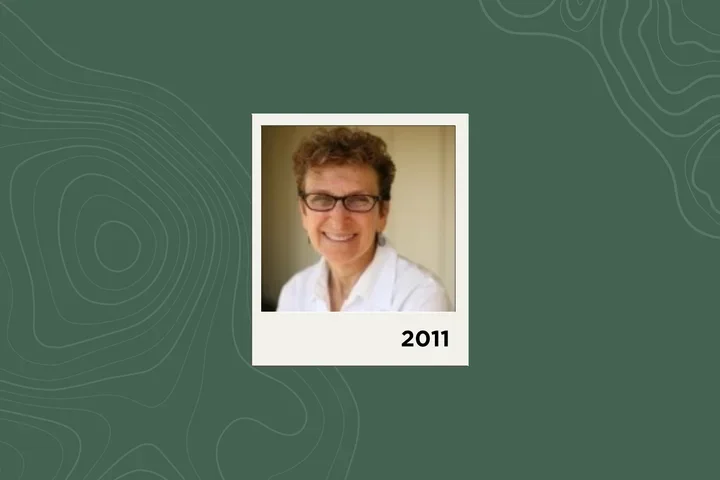
Tina Cheng, MD, MPH is Professor of Pediatrics and Public Health and Chief, General Pediatrics and Adolescent Medicine at Johns Hopkins University, Baltimore. She is a founding member of the MCH Life Course Research Network (MCH LCRN). We recently sat down with Tina to hear her thoughts about the future directions of life course health development research, and her vision for the Life Course Research Network. The interview was hosted by Shirley Russ, MD, MPH, Health Sciences Professor of Pediatrics at the David Geffen School of Medicine at UCLA, and Attending Physician in the Department of Academic Primary Care Pediatrics at Cedars-Sinai Medical Center, and Kandyce Larson, PhD, MSW, Senior Researcher at the UCLA Center for Healthier Children, Families and Communities. This is the first in a series of interviews with national and international experts in life course health development.
SR: How did you first become involved with research that contributes to our understanding of how health develops across the life course?
TC: To me, the idea that events and experiences at one point in time will influence development of health later on is very logical. Like many people, I first became interested in David Barker’s work on the developmental origins of health and disease. From there I became interested in longitudinal studies starting in early childhood, and examining early influences including positive or negative biologic, behavioral, psychosocial and environmental factors on adult health. Development is a huge part of pediatrics, so life course theory is a strong conceptual “fit” with the field. With specific interest in health disparities, the life course ecological perspective makes sense.
SR: What, in your view have been the biggest achievements in life course research to date?
TC: A number of studies, including Barker’s work and many others, have provided evidence that preconception and prenatal influences can have a significant impact on health later on. In addition, research on the social determinants of health has demonstrated the need to go beyond a focus on individual health to population health. Quality research, getting the concept on the radar, and increasing “buy in” to the approach have been big achievements.
SR: Where are the biggest knowledge gaps in your area of research?
TC: I’m particularly interested in positive youth development and violence prevention in at-risk communities, and how adolescents transition to productive adulthood. These are all areas that benefit from a life course approach. One of our biggest gaps is measurement. What should be measured and when in order to improve our understanding of the most important influences on healthy development. There are also huge gaps in knowledge about how we take what we already know and translate it into effective interventions. These are gaps in translational research in my mind, especially at theT3 (implementation and dissemination research into practice).and T4 (“real world” health outcomes and policy) levels: There is a great deal of work to be done.
SR: What are the barriers to closing these knowledge gaps?
TC: On translation, NIH has invested in CTSAs, but needs to make greater investment in studies across the life course and include the T3 and T4 research that is necessary to improve health. Gaining more support for translational research of this type is going to require advocacy, and engaging policymakers.
SR: What role can the LCRN play in helping to overcome these barriers and close knowledge gaps in your area of research?
TC: LCRN members have an opportunity to share their experiences to inform the future direction of life course research. Members could work together on developing conceptual models to guide this work, on setting research priorities, and on collaborative projects. The LCRN provides an opportunity for networking with and learning from other disciplines. Setting an agenda for research in this area can inform policymakers about what should be priorities.
SR: What would be a “dream project” for you to work on through LCRN?
TC: The National Children’s Study that is getting underway has opened a number of opportunities for life course researchers. It has provided a structure to develop projects across multiple NCS sites and study early influences across the life course.
SR: Have you participated in other research networks that you found beneficial to you in your work and that we should consider modeling the life course research network after?
TC: I’ve worked mainly in informal networks. Having common goals and outcomes that the whole group is working towards are very beneficial. I believe networks work best when there are specific tasks and outcomes, and as you are working together you are learning from other people in the network. I’ve been in networks where there’s a lot of discussion, but no specific objectives or products. I have found those to be more problematic and have dropped out of some research networks for those reasons. When there is no common goal, it can be difficult to align the discussion and maintain interest.
SR: If you worked in previous networks that have worked, what was it about them that made them so effective?
TC: Having strong leadership is important – somebody who is leading the way and making clear what those tasks and products are. Group cohesiveness is another important factor. These days it doesn’t have to be face-to-face communication, but it often works better when a group of people get together face-to-face first , and then continue the discussion via calls and through other means.
SR: How can we best design the LCRN so that it is useful to both senior and junior researchers?
TC: It’s hard to address the needs of both at the same time, but conference calls and web-based learning opportunities provide venues in which junior and senior researchers can both participate and learn from each other. A separate forum for junior researchers might be a good way to address their specific needs.
SR: What is something unique that the LCRN could do to support you and your research endeavors?
TC: If the main goals are about sharing ideas and networking, then that can be supportive of some of the efforts I am involved in. The network can bring a new set of research investigators that I do not ordinarily communicate with, which is great and will broaden my horizons. I think the multidisciplinary aspect of it is very important. For many, this network could provide the opportunity for multidisciplinary learning and collaboration.
SR: We know how busy you are. What would make it easier for you to actively participate in this network over the next 3 years and beyond?
TC: “Busyness” is a real problem! I know that people communicate and learn in different ways. Some people communicate a lot over web-based modalities. Some learn more at meetings. Some get a lot out of webinars and conference calls. It will be easier for me to participate if I know there is a tangible outcome that we are all working on to move the field. I would be interested in webinars and meetings for learning and networking.
SR: What can the LCRN do to advance the methodology of life course development research?
TC: I like the idea of an agenda-setting meeting, and think this would be one of the questions to discuss. We may want to get some work groups thinking about methodology, and making methods development part of the research agenda for life course research in general. In 2008, we convened a conference entitled “Starting Early: A Life Course Perspective on Child Health Disparities.” It was an invitational agendasetting conference that resulted in a supplement in Pediatrics outlining a research action agenda. It is something the LCRN could do and keep the discussion going after the meeting through the network. I think one of the challenges in life course research is getting investigators to consider the whole life course – for instance, one of the things we tried to do in this meeting for child health disparities was to get adult researchers, as well as prenatal researchers. That was difficult, partly because the title of the conference was on child health disparities and our disciplines are siloed by age. To really advance life course health development research, how do we get researchers interested in all of the different stages of development together to think about research questions that do cross time and age? How do you get adult researchers thinking about early antecedents in their research? How do we get child health professionals to think about family health and preconceptional and prenatal health?
SR: One question commonly raised is “life course health development is an interesting theory, but what implications are there for practice based on what we know to date?” How would you answer that question?
TC: Sure, it’s a theory, but there is much research showing its impact in real life. What happens early in life influences what happens in health later in life. There are huge implications for practice. Also, considering an ecological framework of multiple determinants of health is important in this age of the “genetics revolution.” We now know that it’s not just about genes, but epigenetics and gene environment interaction. This really changes our understanding about the relationship between biology and the environment. Already, there is a lot that we know about biologic and non-biologic early influences that confer susceptibility to disease later on. Addressing these influences - what some call “prospective medicine”- will become more influential in medical practice. As a practicing pediatrician, it is easy to get “stuck” in doing what you’re trained to do mainly on an individual level. But what's really needed is for us to think about what the future holds and how we can improve health outcomes and change our conceptual approach. We are learning about some of the early antecedents of health now. How do you apply that knowledge to improve the future health of the child in front of you? How do we incorporate this knowledge into our practice? Practice is always changing – how do we stay ahead of the curve?
SR: What do you think will help enable the translation of knowledge about life course health development into practice?
TC: There needs to be more inclusion of those in practice on how to how to do this. Practitioners need to be kept up-to date on scientific discoveries and how they might change practice. On the population level, this research must drive public health interventions and policy.
SR: What do you believe are the highest priority research areas that this network could focus on to advance this state of life course research for the maternal and child health field?
TC: I’m particularly interested in psychosocial and environmental influences on later health. We have learned much from the ACE (Adverse Childhood Experiences) Study by Felitti et al., which examines childhood trauma (ACEs), and health and behavioral outcomes later in life. Further research should explore the mechanisms and guide intervention and policy. From a child health disparities perspective, we need to understand the mechanisms that lead to disparities by race/ethnicity, socioeconomic status, educational level. We also need more work on positive health - on resilience, health potential and health capacity.
SR: Do you have suggestions on topic areas to be considered for the 8-9 “state of the science” papers that we will be commissioning?
TC: Oftentimes people think about topic areas by disease states. I’m less interested in that approach. Certainly, some papers should be on the conceptualization of life course and what we already know. Some focus on the translation to practice and policy would be important. I’ve been asked the question of what’s the upside and downside of the life course approach in the policy world, which I found to be an interesting question. I also believe it’s important to have an international perspective. We have a tendency to be very U.S.-centric, but there’s a lot of international basic research on life course and international intervention approaches that we can learn from.