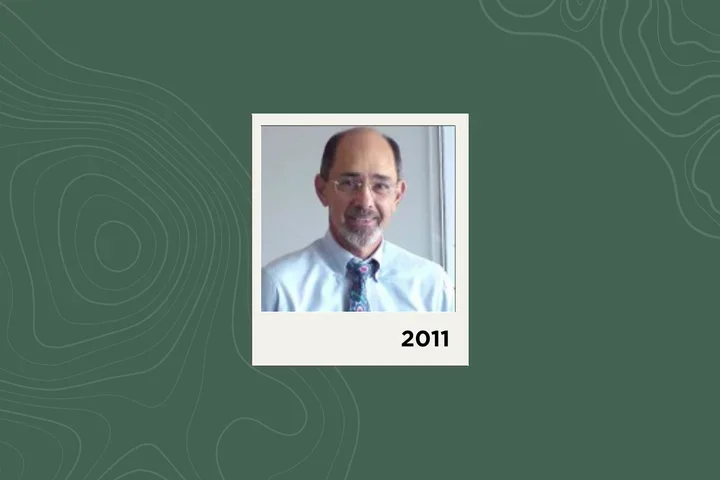
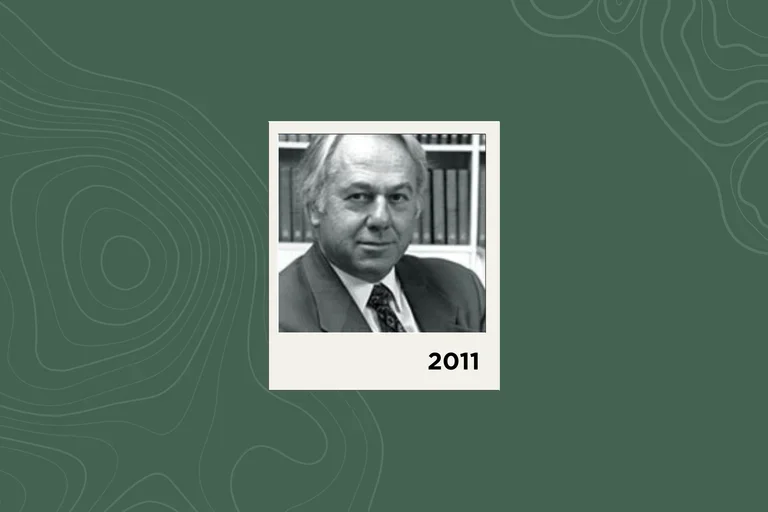
Life Course History: Interview with David Barker
Originally published by the Life Course Research Network (LCRN) on April 1, 2011
Note from the Author
In 2011, our Life Course Research Network conducted a series of interviews with national and international experts working to translate a life course approach into practice. Guided by PI Neal Halfon and conducted by researchers Michael Lu, Shirley Russ and Kandyce Larson, these interviews provide a “historic snapshot’ of our understanding at that time. They are not a comprehensive record of activity in the field but reflect the perspectives of a core group of MCH leaders. They prompt reflection on how far we have come and how much we have yet to do. Copies of these transcripts have been deposited at the Georgetown Center for the History of Maternal and Child Health. Interviewees include David Barker, Chris Forrest, Bernard Guyer, Cheri Pies, Chad Abresch, and Tina Cheng.
Explore the Life Course History Series
Interview
Published April 1, 2011
David Barker, M.D., Ph.D., FRS is a Physician and Professor of Clinical Epidemiology at the University of Southampton, U.K. and Professor in the Department of Cardiovascular Medicine at the Oregon Health and Science University, U.S. Twenty years ago, he showed for the first time that people who had low birth weight are at greater risk of developing coronary heart disease. In 1995, the British Medical Journal named this the “Barker Hypothesis.” It is now widely accepted. In 2003, he joined Professor Kent Thornburg at the faculty at the Heart Research Center, OHSU, to study how nutrition and growth before birth and during early childhood alter the development of the heart.
This interview – which was conducted by Michael Lu, MD, MPH, Associate Professor of Obstetrics & Gynecology and Public Health at UCLA, and Jessica Chow, MPH, Research Associate at the UCLA Center for Healthier Children, Families and Communities - is the third in a series of interviews with national and international experts in life course health development. The series is produced by the Maternal and Child Health Life Course Research Network (MCH LCRN), which is managed by the UCLA Center for Healthier Children, Families and Communities, and made possible by funding from the federal Maternal and Child Health Bureau (grant #UA6MC19803).
ML: What do you think are the biggest knowledge gaps today in terms of the Barker hypothesis and developmental origins?
DB: There are three broad areas of ignorance.
The first is, “What are the processes put in place during fetal and infant development that play out over many years as chronic disease?” Our work toward answering this question is generally going okay because there are animal models and increasing amounts of clinical research. However, we assume that all knowledge is equally good, and there’s no sense of hierarchy between knowledge that is necessary to fix things and knowledge for knowledge’s sake. There is an implicit assumption that all knowledge of molecular mechanisms is intrinsically useful and is worth funding, but it’s not true - we fixed yellow fever long before we knew it was due to a virus!
The second is, “If the passage of nutrients from normal healthy mothers to normal healthy babies has profound long-term significance, then what do we know about that process?” We know essentially that the fetus is nourished by the mother’s body, but the number of people who really know about the normal human placenta is extremely limited. There is a book that recently came out through Cambridge University Press as a result of a meeting one year ago in Cambridge demonstrating that our ignorance of the normal placenta is astounding. We now know that crude indices, such as the shape of the placental surface, predict long-term health and life span. That research has just been accepted for publication.
The third area is the lifetime nutrition and metabolism of the mother. We want to improve the food choices of girls and young women, but we’re nowhere near that goal. There is a randomized trial in India on preconceptional nutrition that’s coming along, and another trial in Southampton, but little other activity.
ML: What do you think are the major barriers to closing these knowledge gaps?
DB: Getting people from different disciplines to collaborate and be informed by each others’ work. I think that’s a huge challenge. People are comfortable being with their own kind. They think, “I’m a physician in internal medicine, so what am I doing in a placenta meeting?” What we don’t see is genuine interdisciplinary collaboration. There is some within certain institutions – like Kent [Thornburg’s] place in Oregon.
ML: What role do you think the MCH LCRN can do to overcome these barriers and get people out of their comfort zones?
DB: I think NIH and NICHD will have to be a part of that – there are a few upcoming meetings and hopefully good thoughts will come out of them. I think what they’re trying to do in Europe is use the framework of EU grants to bring together people who would normally not be together, and to make sure the medical people get to sit around the same table as the people who work on animals. The gap is huge.
ML: Have you participated in any research networks that were beneficial and that could help to inform the design of our network? Which features make it easier to bridge silos?
DB: Obviously, it hasn’t been difficult to build a group within Oregon or the University of Southampton, but the people we want to collaborate with aren’t necessarily in those institutions. You find as you develop relationships with people across the U.S. that they live by different rules, and that you spend a lot of time in airplanes, but progress is slow. It’s been 25 years since the Lancet paper was published, and it doesn’t have the kind of traction it should have. My concern is that the human genome project derailed medical research and we’re now seeing people leaping off that Titanic and getting into lifeboats called epigenetics that require a huge budget. There are a large number of problems in the life course that are not going to be solved by molecular biology. We need more human biology!
ML: What would be a dream project for you to work on, either through this network or collaboratively with others over the next 5-10 years?
DB: There are big issues in child growth. There’s a paper that has been accepted this month pointing out that boys who are tall at age 7 generally lead longer lives than boys who are short, which is well known. But if they were short and then experienced accelerated growth, that comes at a huge cost. The compensatory growth field is ripe for research, and is relevant to the public health problem of African-Americans who grow tall but still die so young, like in South Carolina, where they’re tall but they can get renal failure in their 20s. I also like anything to do with the placenta – I can explain to my grandchildren how important is the way they were joined to their mother!
ML: We know how busy you are. What would it make it easier for you to actively participate in the MCH LCRN over the next few years?
DB: We need to meet physically - maybe not too often. Perhaps a conference call. But you have to meet people once before you share data with them. Though I don’t think there’s any real sense of competition - there’s so much to do, why not share? In epigenetics, people are going into secrecy mode, but that’s the trouble about that kind of science.
ML: What would enable translation of the Barker hypothesis into practice and policy? The last time we had dinner, I could sense some feelings of urgency and frustration on your part that the message is not quite out there.
DB: The British Medical Association wrote 10 years ago about the need to improve food choices, and what’s happened to it? In short, nothing at all!
In our country, the whole process of fetal programming research arose from the north/south divide in health. Coronary heart disease is more prevalent among people in places that are historically poor and vote for the Socialist party. Fetal programming could have a lot of traction because social inequalities in health are still a big deal. In the different areas of the U.S., for example, there is a five-fold difference in rates of coronary heart disease. The areas with the highest death rates are in the south and east where there’s a history of poverty. But I don’t know how that plays out politically in the US, so maybe it doesn’t have traction. There are also the sexual inequalities in health. Maybe that whole area is something we can work on. Boys grow differently in the womb than females.
I don’t know how to move things along. Last year, the article [by Annie Paul] in TIME magazine helped a lot, and I had tons of feedback from that.
ML: I think that book and the TIME magazine article and the NY Times editorial really did a lot in terms of getting the word out there to raise awareness and communicate to the public what we knew for 20 years about the importance of this research. What do you believe are the highest priority research areas that the network could focus on to advance the state of research?
DB: We need to move away from being disease-specific and start looking at the phenomenon, at core mechanisms and processes. This is relevant for certain cancers – for example, people’s vulnerability ability to develop lung cancer if they smoke is programmed.
ML: Some of us have been thinking about proposing formative research in the National Children’s Study on positive health. So much of our focus has been on negative health, but if we want to measure how positive health develops, what are the things that we should measure?
DB: Cardiologists naturally want to know how can we repair broken hearts, but why don’t we make better hearts in the first place? That’s what’s missing! James Heckman, an economist at the University of Chicago, ranked 3-year-old kids by their cognitive ability and their rank is essentially unchanged 7 years later. This is tremendously relevant in education. If you don’t get it right by year 3, forget it, your chances to go to Harvard are blown away.
Three big contributions from fetal origins research could be to our understanding of cognitive function, childhood obesity, and longevity.
ML: Any advice or guidance?
DB: I just battle these things and we obviously are making progress. Since I met you, the profile of this whole thing has gone up. That’s good!
The other thing I’ll add is that there are two life course models. One model - largely wrong - says that as you go through life, you accrue damage. The other model says that if you’re well built, you won’t sustain damage. This is an important public health thing. We all know that some people lead terrible lives but live to be 100. In contrast there are African-Americans in South Carolina whose health falls apart at an early age. Some people are born vulnerable while others are born resilient.
ML: This is great, thanks!